
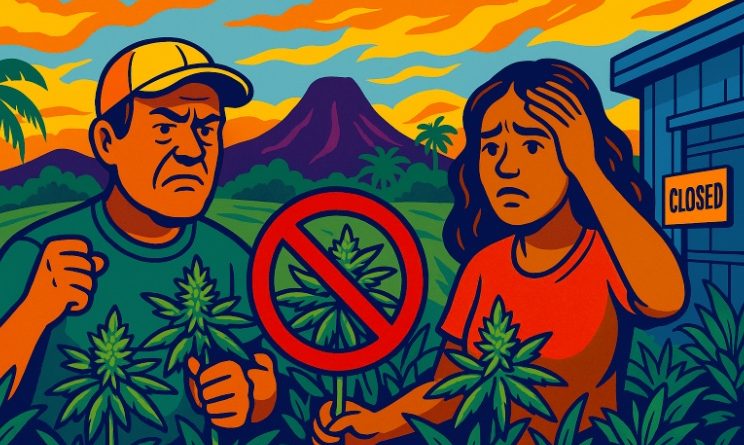
Hawaii Cannabis Caregivers and Grow Sites Face Shutdown Threat
It’s hard to imagine a more glaring example of legislative negligence than Hawaii’s impending cannabis caregiving crisis. Come December 31, thousands of patients will lose access to the caregivers they rely on for their medicine. This abrupt end to caregiver grow sites—crafted into law with an expiration clause lawmakers conveniently forgot—will force patients into an unregulated black market.
The current law allows registered caregivers to cultivate up to ten plants for patients who cannot grow their own. This provision has been a lifeline, especially for the elderly, disabled, and those living in urban environments like condos. But thanks to bureaucratic apathy, that lifeline is about to be severed.
Legislators such as Rep. Della Belatti admit this looming disaster is a “failure,” but acknowledging the problem does nothing to resolve the immediate crisis. Patients are left wondering how this oversight wasn’t addressed in advance when their health and well-being hinge on these caregiving provisions.
Countdown to a Cannabis Crisis
- Hawaii’s caregiver ban will cut off thousands of patients from affordable medicine starting December 31.
- Dispensaries remain too expensive and inaccessible for many, leaving patients with limited options.
- Community grow sites, essential for collaboration and affordability, face shutdowns due to arbitrary patient limits.
- Lawmakers admit their oversight but offer no immediate solutions, pushing patients toward the unsafe black market.
- Advocates demand urgent action to restore caregiving rights and protect patient access to medicine.
- This debacle highlights the need for compassionate, patient-focused reform in cannabis legislation.
Impact on Patients and Caregivers

When the Dec. 31 deadline hits, caregivers like Lorraine, who grows cannabis for her mother at Care Waialua, will be stripped of their legal rights.
Lorraine’s story is not unique.
Thousands depend on caregivers to alleviate chronic conditions such as cancer, anxiety, and pain. Without these caregivers, many patients will face an unthinkable choice: go without medicine or turn to the black market.
Let’s not mince words here—requiring bedridden patients or those with severe disabilities to grow their own cannabis is nothing short of cruel. Dispensaries, often touted as an alternative, remain prohibitively expensive and geographically inaccessible for many.
- Key groups affected by the caregiver ban:
- Patients with physical disabilities.
- Urban residents restricted by housing regulations.
- Economically disadvantaged individuals unable to afford dispensary prices.
Jason Hanley, founder of Care Waialua, highlights the harsh reality: caregivers are indispensable, not optional. The state’s decision to remove this resource is a clear signal that they value compliance over compassion.
The Role of Community Grow Sites

Community grow sites like Care Waialua are more than just cultivation hubs; they are sanctuaries of knowledge and collaboration. These sites allow caregivers and patients to share resources, expertise, and camaraderie. Now, they’re being targeted as potential “black market” incubators, despite a lack of substantial evidence to support these claims.
Let’s take a moment to address the federal raid on Care Waialua where 14 months later, no charges have been filed. Curious, isn’t it? Hundreds of patients abandoned the site after the raid, fearing legal repercussions.
With this chilling effect already in place, the looming shutdown feels like a final nail in the coffin.
The ban on grow sites serving more than five patients will effectively dismantle these community spaces. Legislators like Sen. Joy San Buenaventura acknowledge the severity of this issue but seem powerless to stop the momentum of a bad law.
Black Market Risks and Accessibility Concerns

Here’s the twisted irony: Hawaii’s law enforcement has long expressed concern about the cannabis black market.
Yet, by eliminating caregiver grow sites, they’re shoving vulnerable patients directly into it.
The black market, unregulated and unsafe, is a minefield for patients. Quality control? Nonexistent. Pricing? Exorbitant. Legal risk? Sky-high. But for many, it’s the only remaining option. This contradiction highlights the disconnect between lawmakers’ stated goals and the actual outcomes of their policies.
- Risks of turning to the black market:
- Unregulated products pose potential health hazards.
- Vulnerable patients face legal jeopardy.
- Patients may be forced into interactions with criminal networks.
Lawmakers like Belatti and San Buenaventura promise to “address the situation,” but these words ring hollow without immediate action. Patients deserve laws that protect their rights—not bureaucratic excuses and delayed fixes.
“They’re left either to the black market, which we know is unregulated and untested, or to nothing at all. That’s the situation, and we’re going to have to deal with it.” – Rep. Della Belatti
It’s astonishing how easily legislators can acknowledge the devastating impacts of their inaction while offering little more than empty promises.
The Legislative Response and Path Forward

It’s truly poetic how legislators can openly acknowledge their failures and yet leave patients scrambling for solutions.
Hawaii’s lawmakers, in a masterclass of reactive governance, promise to “address the situation” in the next legislative session. Meanwhile, thousands of patients are left without their medicine, caregivers are forced to abandon their roles, and community grow sites are being systematically dismantled.
The timeline for any meaningful reform is murky at best. The legislative session could bring new solutions—or more empty promises. But here’s the kicker: why should anyone trust a system that let this crisis happen in the first place? Patients don’t need vague assurances; they need immediate action.
- Potential solutions lawmakers must prioritize:
- Reinstating the caregiver program without arbitrary restrictions.
- Supporting community grow sites with legal protections.
- Reducing reliance on dispensaries by creating affordable alternatives.
It’s time for Hawaii’s cannabis policies to reflect the values of compassion and accessibility. Anything less is just lip service, and patients deserve better than that.
The Bigger Picture

Hawaii’s caregiver debacle isn’t just a local issue—it’s part of a larger trend where cannabis regulation often serves corporate interests over the needs of the people. Dispensaries, while helpful for some, are not a substitute for the affordability and accessibility provided by home grow operations and caregivers. Yet, laws across the United States continue to push patients toward these high-priced options under the guise of “safety.”
Consider this: cannabis, once used as a form of currency, is now taxed to oblivion and burdened with more red tape than prescription opioids.
Let’s not ignore the spiritual significance of cannabis. For countless individuals, cannabis is more than medicine; it’s a sacrament, a connection to the divine, and a tool for introspection. To regulate it into oblivion is not just an infringement on health—it’s an assault on freedom itself.
Advocating for Common Sense

The real tragedy here is how preventable this entire situation is. Hawaii’s government had seven years to create a sustainable system for caregivers and patients, and yet here we are. It’s almost as if the goal was to push patients toward dispensaries all along.
Imagine that.
Instead of embracing a model that prioritizes patient welfare, lawmakers are now scrambling to fix their own mess. Patients should not have to pay the price for this failure—whether in dollars at dispensaries or in health as they lose access to their medicine.
As advocates, it’s critical to demand better:
- Restore caregiving rights: Patients should have the freedom to choose how they access their medicine.
- Protect community grow sites: These spaces are vital for affordability and collaboration.
- Reject overregulation: Laws should serve patients, not corporations or law enforcement agendas.
“When access to medicine is restricted, the consequences are clear: patients suffer, black markets thrive, and trust in governance erodes.”
The road forward requires bold action and unwavering advocacy. Hawaii must choose whether to protect its most vulnerable citizens or let them fall through the cracks of bureaucratic incompetence.
Moving Forward

The situation in Hawaii is a stark reminder of the broader challenges facing cannabis legalization efforts. Laws designed to regulate cannabis must be rooted in accessibility, compassion, and the fundamental right to health and freedom. Anything less is unacceptable.
For those in Hawaii and beyond, now is the time to advocate for patient-first policies. Legislators must feel the pressure to correct this course before thousands are left without their medicine. And for patients, caregivers, and advocates alike, the fight for cannabis justice is far from over.
Let this crisis be a rallying cry for reform. After all, when laws fail the people, it is up to the people to demand change.