
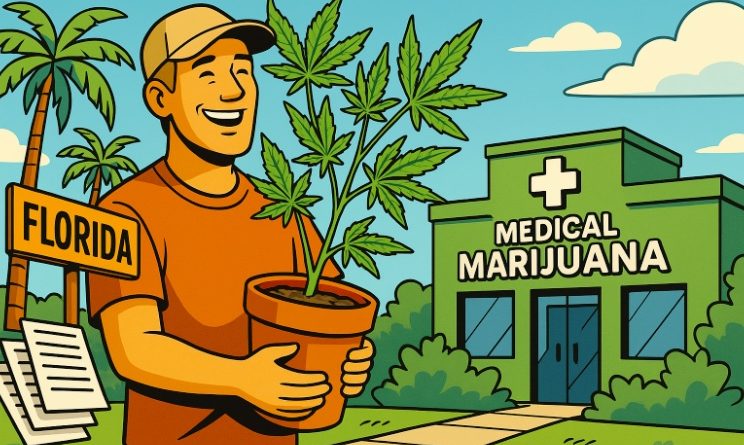
Florida Expands Medical Marijuana Market
After years of delays, Florida has finally decided to loosen its stranglehold on the medical marijuana market. The state has begrudgingly issued 22 new licenses, breaking the iron grip of 28 companies that have been reaping the rewards of a near-monopoly for years. This so-called “expansion” brings hope to nearly 1 million medical marijuana patients who deserve better than a market controlled by a few corporate giants.
The timing of this decision couldn’t be more telling, however. After Amendment 3, which would have legalized adult-use cannabis, failed at the ballot box, suddenly the state remembers its obligation to issue licenses.
It’s almost as if Florida’s lawmakers only act when it benefits the powers that be. Meanwhile, the patients, who should be the heart of this system, have been forced to wait while bureaucrats drag their feet.
The truth is simple: cannabis should be accessible to all, free from corporate gatekeepers and government red tape. This expansion is a small step in the right direction, but let’s not mistake crumbs for a feast.
Florida’s Cannabis Shake-Up
- Florida finally issues 22 new licenses after 19 months of delays, challenging the corporate stranglehold over the market.
- Black farmers see progress with specific licenses after years of discrimination and legal battles.
- Patients could benefit from better access and affordability, but lawsuits threaten to stall progress.
- Bureaucratic inefficiency and favoritism remain major barriers in expanding the market equitably.
- Advocates push for a transparent, fair system that prioritizes people over profits.
- Florida’s overregulated cannabis framework still caters to corporate greed, limiting its full potential.
The Politics and Controversy Behind the Delay

Florida’s marijuana market has always been more about politics than patients. Governor Ron DeSantis, a self-proclaimed opponent of corporate greed, took a public stance against Amendment 3. He claimed it would only benefit a handful of companies, ignoring the fact that the current medical marijuana system already benefits the same few corporations. Irony much?
State law mandates the issuance of four new licenses for every additional 100,000 patients. Florida hit that milestone years ago, but the government has been conveniently out of compliance. Lawyers and lobbyists cite “due diligence” and “fairness” as reasons for the delay. Meanwhile, patients continue to navigate a market designed to benefit a select few.
Let’s call it what it is—stonewalling.
This isn’t a conspiracy theory; it’s reality. The more regulated cannabis becomes, the harder it is for the average person to access. Licensing delays and limited competition drive up prices and restrict availability, all under the guise of protecting consumers. In truth, these delays only protect profits.
“The system set up by Florida really does benefit a few and prejudice many.” – Richard Blau, regulatory law expert
Even with these new licenses, expect lawsuits and further delays. Because when it comes to cannabis, bureaucracy always finds a way to stall progress.
Challenges Faced by Applicants During the Wait

The companies vying for licenses weren’t just sitting idly by during Florida’s 19-month delay. No, they were hemorrhaging cash to stay in the game. Land leases, retail space, and operational costs piled up while the state took its sweet time grading applications.
Some applicants were paying tens of thousands of dollars per month just to hold onto potential dispensary locations.
What makes this worse is the uncertainty.
Florida’s drawn-out process forced applicants to keep teams intact for nearly two years. Medical directors and key personnel often left for other opportunities, leaving businesses scrambling to replace them. Will the state penalize these companies for making necessary adjustments during an absurdly long wait? Probably—because punishing progress seems to be the theme of Florida’s cannabis regulations.
Consider these hurdles:
- Skyrocketing operational costs – Companies had to secure land and pay hefty fees while waiting for approval.
- Constant personnel changes – Key team members moved on, leaving gaps in business plans.
- Bureaucratic uncertainty – Applicants had no idea when—or if—they’d get approved, making planning nearly impossible.
Other states manage to approve licenses in a matter of months. Florida, however, stretches the process out for years, forcing smaller operators to bleed money while favoring those with deep pockets. It’s hard not to wonder if this is by design. After all, what better way to weed out the competition than to make the barrier to entry financially crippling?
Progress for Minority Inclusion in Cannabis Licensing

Florida’s cannabis laws may be riddled with bureaucratic nonsense, but one bright spot is the incremental inclusion of Black farmers in the licensing process. This overdue effort stems from the Pigford cases, which exposed years of systemic discrimination against Black farmers in agriculture. The state, begrudgingly, allocated specific licenses to these farmers—only after extensive litigation forced their hand.
In November, three Black farmer applicants were finally awarded licenses after being denied in the original application process. It’s a win, albeit a small one, in a system designed to cater to those with the deepest pockets.
For decades, these farmers were left out of the conversation entirely, as Florida’s “competitive” licensing process heavily favored large corporations with endless resources.
“Expanding the market to minority growers is long overdue and still far too limited to balance the inequities of the past,” says Jae Williams of the Department of Health.
The legislative measures that secured these licenses are a step forward, but the broader framework remains deeply flawed. Out of 22 new licenses, only a fraction addressed these historic inequities. The question isn’t whether progress is being made—it’s whether that progress is meaningful enough to create a level playing field in the cannabis industry.
Spoiler: It’s not.
Here’s the bitter truth: cannabis prohibition targeted communities of color for decades, and now legalization systematically excludes them from the economic opportunities it creates. Let’s not pretend Florida is doing anyone a favor with these crumbs.
What This Means for Patients and the Industry

For Florida’s nearly one million medical cannabis patients, the expansion of licenses could mean better access and lower prices—or at least that’s the sales pitch. The reality is more complicated. While additional competition sounds promising on paper, it’s unlikely to materialize quickly thanks to lawsuits and regulatory roadblocks.
Right now, patients face limited dispensary locations and exorbitant prices due to the market’s consolidation. Imagine a state where more licenses equal better access to affordable medicine. Sounds great, right?
Unfortunately, Florida has a habit of making the simplest solutions as convoluted as possible. Instead of opening the floodgates, the state seems determined to keep the market a dribble.
What could improve for patients?
- More competition among dispensaries could lower product prices.
- A larger number of storefronts might shorten travel times for patients in rural areas.
- Increased availability of diverse strains and products tailored to specific needs.
However, these benefits hinge on one major obstacle: lawsuits.
Every time Florida grants a batch of licenses, it triggers a wave of legal challenges from losing applicants. Because nothing says “we care about patients” like years of litigation over who gets to profit off their medicine. This predictable cycle delays progress and keeps patients stuck in a system that doesn’t prioritize their needs.
Meanwhile, advocates continue pushing for more equitable access and transparency in the licensing process. Patients deserve better than a market held hostage by greed and government inefficiency. The current system favors corporate interests over public health, and every delay only deepens that imbalance.
The Future of Cannabis in Florida
Florida’s cannabis industry has enormous potential, but it remains trapped in a web of overregulation and corporate favoritism. The issuance of 22 new licenses is a glimmer of progress, yet it doesn’t address the larger systemic issues plaguing the market.
The state’s framework prioritizes profits over people, treating cannabis like a privilege rather than a fundamental right.
Legalization advocates argue that Florida’s restrictive model benefits a few at the expense of many. They’re not wrong. The overwhelming dominance of a handful of corporations creates barriers to entry for smaller operators, particularly those from marginalized communities. Expansion won’t fix these inequities unless the state prioritizes fairness over bureaucracy—a prospect that seems unlikely given the track record.
The debate over recreational cannabis legalization adds another layer of complexity. If Florida can’t manage its medical marijuana market without endless delays and favoritism, how will it handle the broader demand of adult use?
The answer is simple: it won’t.
Without a complete overhaul, the same problems will persist, leaving everyday Floridians to pay the price for a system built to serve a select few.