
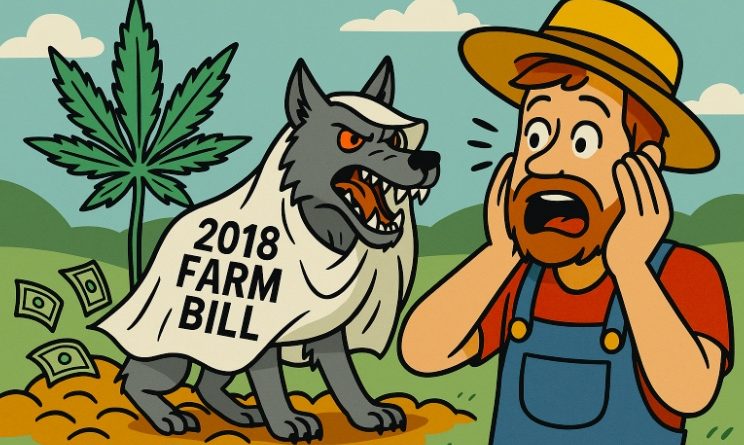
How the 2018 Farm Bill Hurt Cannabis Freedom
The 2018 Farm Bill wasn’t crafted to protect consumers or farmers—it was a wolf in hemp’s clothing. Politicians packaged it as a win for agriculture, yet the bill quietly paved the way for chaos in the cannabis space. With deliberately vague language and loopholes, it opened Pandora’s box for intoxicating hemp derivatives like Delta-8 and THC-O while doing nothing to preserve the plant’s integrity or heritage.
This wasn’t an accident. It’s not hard to see that the government never intended to empower the cannabis movement. Instead, they handed control to shady actors flooding the market with synthetic knockoffs and toxic products under the guise of “hemp innovation.” Meanwhile, the natural cannabis that millions have used for centuries—often for spiritual purposes—is sidelined, demonized, and overregulated.
The Truth About Hemp Laws and Freedom
- The 2018 Farm Bill created intentional loopholes, allowing synthetic hemp products to poison the market and damage cannabis’ reputation.
- Intoxicating hemp derivatives like Delta-8 are unregulated, filled with toxins, and tarnish natural cannabis.
- State regulations fail to address the root issue, instead targeting small growers and banning natural cannabis products.
- Home-growing is under attack with harsh licensing rules and corporate favoritism overshadowing personal freedoms.
- Grassroots activism and education are essential to reclaim the right to grow and use cannabis freely.
- True cannabis freedom means rejecting overregulation and corporate greed to protect a sacred plant’s legacy.
Intoxicating Hemp Products and Their Impact

The Farm Bill’s loopholes turned the cannabis market into a wild west of unregulated intoxicants masquerading as legitimate hemp products. Delta-8, THC-P, and HHC are everywhere—gas stations, convenience stores, and shady online retailers—but these aren’t your grandma’s cannabis. They’re chemical concoctions riding the coattails of hemp’s legal status, created solely to exploit loopholes for profit.
Here’s what these products bring to the table:
- Misleading potency levels: A product marketed as hemp can be loaded with THC derivatives far exceeding legal limits.
- Health risks: Untested and synthetic products often contain pesticides, heavy metals, and residual solvents.
- A tarnished reputation for cannabis: People now confuse cannabis’ natural healing power with the effects of cheap, toxic imitators.
“When you allow unchecked synthetic derivatives to dominate the market, you’re not regulating cannabis—you’re sabotaging it.”
Instead of protecting consumers or farmers, these intoxicating hemp products serve as bait for anti-cannabis lawmakers. They point to the mess created by these synthetic cannabinoids as an excuse for stricter regulations. The government gave us the problem and now acts like they’re the solution.
Poisoning the Public to Control the Market

Let’s be clear: the problem isn’t cannabis. It’s the toxic, unregulated products being sold under the name of hemp. When corporations prioritize profit over safety, the public suffers—but so does cannabis as a whole.
Consider this: pesticides, heavy metals, and caustic chemicals are routinely found in synthetic cannabinoid products. These aren’t problems associated with natural cannabis grown responsibly by passionate cultivators; these are the byproducts of greed and regulatory failure.
Why hasn’t the government stepped in? Because poisoning the public is part of the plan. By allowing these harmful products to proliferate, regulators create a justification for cracking down on cannabis in the name of “public safety.” It’s a page right out of the prohibitionist playbook: scare the public, vilify the plant, and profit from the fallout.
For anyone who truly understands cannabis, this is a tragedy. Cannabis is more than a plant; it’s a cultural cornerstone, a spiritual tool, and a constitutional right. By poisoning its image with synthetic toxins, regulators are attempting to erase its legacy.
What the New Senate Farm Bill Draft Means

The updated Senate Farm Bill draft is a thinly veiled power grab. It pretends to address the chaos caused by the 2018 Farm Bill but instead doubles down on restrictive measures that push the natural cannabis movement further into the shadows.
Key changes in the draft include:
- A redefinition of hemp to include total THC levels (THCA, Delta-9, and more).
- Two-tiered licensing for “industrial hemp” and “general hemp” producers, with vastly different compliance requirements.
- Stricter bans on cannabinoid resin production from hemp—essentially barring small producers from creating natural cannabis products.
While the draft introduces some clarity, it primarily serves corporate agriculture interests. Producers using certified seeds may qualify for reduced testing—but only in a handful of states, and under conditions so specific that they exclude smaller, independent growers. Meanwhile, those who deviate even slightly from these rules face bans and penalties, effectively shutting them out of the industry.
Make no mistake: this isn’t about safety or fairness. It’s about consolidating control. By imposing arbitrary THC limits and favoring industrial-scale operations, lawmakers are ensuring that cannabis stays out of the hands of the people who value it most.
The Senate’s draft is a betrayal of the public’s trust and a slap in the face to the millions who recognize cannabis as a natural right.
States Take Action Against Hemp Products

While federal lawmakers drag their feet pretending to “fix” the problems they created, states have jumped into the fray with their own rules for hemp-derived products. This patchwork approach has led to a predictable mess where legal cannabis is replaced by a sea of bans and restrictions. What’s worse? These state measures do little to distinguish between natural cannabis and the chemically bastardized versions flooding the market.
Several states, eager to display their regulatory might, have outright banned products like Delta-8 THC. Others, claiming to act in the name of public health, have slapped confusing restrictions on anything even remotely associated with hemp-derived cannabinoids. These laws seem more focused on keeping cannabis out of consumers’ hands than ensuring product safety.
Here’s what this chaos looks like in practice:
- Bans on Delta-8 THC and similar products in places like New York, Texas, and Colorado.
- Conflicting testing standards from state to state, creating uncertainty for producers and consumers.
- Severe penalties for small violations, designed to discourage independent farmers and small businesses.
“Instead of addressing the root cause—the lack of federal clarity—states are playing whack-a-mole with hemp products while leaving the real cannabis industry to fend for itself.”
This state-level overreach is yet another example of how cannabis, a plant with centuries of safe use, has been turned into a scapegoat. Politicians are more than happy to regulate, ban, or tax it into oblivion, all while ignoring the people’s right to access it freely.
The Threat to Natural Cannabis Rights

Let’s not mince words: the government’s relentless control over cannabis is a direct attack on individual rights. The right to grow and use cannabis is protected by the First Amendment, not to mention basic common sense. Yet, regulatory schemes like the Farm Bill and its state-level offspring are designed to strip that freedom away.
Natural cannabis—the kind you can grow in your backyard without fear of persecution—is under siege. Home-growing laws are either restrictive or nonexistent in many places, ensuring that only licensed corporations can profit from the plant. Even in states with legal cannabis, the hoops you have to jump through to grow a few plants are outrageous.
Here’s what this regulatory assault looks like:
- Licensing fees and requirements that are prohibitively expensive for ordinary people.
- Arbitrary plant limits that stifle personal cultivation.
- Heavy-handed enforcement against home-growers who dare to exceed these limits.
The hypocrisy is staggering. The same lawmakers who claim to champion cannabis reform are the ones ensuring that true cannabis freedom remains out of reach. Why? Because they’d rather see cannabis in the hands of pharmaceutical giants and tax collectors than the people it belongs to.
Cannabis is not just a commodity; it’s a sacred plant. It has spiritual, medicinal, and cultural significance that no amount of regulation can erase. Attempts to control it are not just bad policy—they’re an affront to history and humanity.
A United Fight for Cannabis Freedom

The cannabis community has faced these challenges before and will rise to meet them again. It’s clear that the future of cannabis isn’t in the hands of regulators or corporations; it’s in the hands of the people who understand its true value.
Education is the first line of defense. Consumers must learn to distinguish between natural cannabis and the synthetic derivatives that have flooded the market. These knockoffs are not representative of cannabis; they are products of greed, designed to profit from confusion. Know your cannabis, and know your rights.
Grassroots advocacy is equally crucial. History shows that change comes from the bottom up, not the top down. Local activism can push back against unfair laws and demand reforms that prioritize the people over corporations. From home-grow campaigns to voter initiatives, the tools for change are already in our hands.
“The right to grow and use cannabis is not something to be granted by lawmakers—it’s a right that exists by nature.”
Cannabis freedom is not a privilege, and it’s certainly not something to be regulated into oblivion. The fight for cannabis is the fight for freedom itself. Stay vigilant, stay educated, and most importantly, stay united. The plant—and the people—deserve nothing less.