
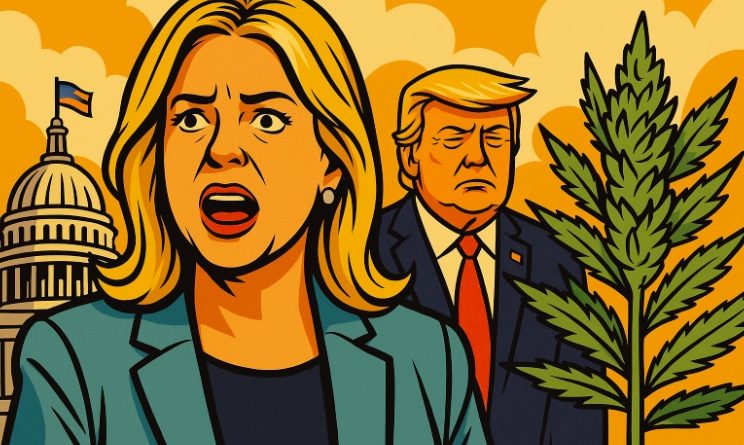
Pam Bondi Sparks Cannabis Reform Concerns
Donald Trump’s pick of Pam Bondi for Attorney General has ignited passionate discussions within the cannabis community. Known for her history of staunch opposition to medical marijuana, Bondi represents a sharp pivot from Trump’s initial choice, Matt Gaetz, a well-known advocate for cannabis reform. While Bondi’s supporters tout her pragmatic approach to law enforcement, her track record tells a different story for anyone hoping for a sane cannabis policy at the federal level.
Bondi’s nomination feels like a step back toward outdated drug war rhetoric—a rhetoric that has long been debunked by science and rejected by the majority of Americans. While Gaetz had been a beacon of hope for cannabis businesses and consumers alike, Bondi’s appointment signals the possibility of renewed federal interference in the growing cannabis industry.
The irony of this situation is palpable. Cannabis, which once paid taxes, is now taxed into oblivion. Bondi’s nomination appears to perpetuate the cycle of bureaucratic roadblocks and fear-mongering policies designed to stifle personal freedom.
What You Need to Know About Bondi and Reform
- Pam Bondi’s Attorney General nomination raises concerns due to her anti-reform stance during her tenure as Florida AG.
- Bondi opposed medical legalization efforts and defended bans on smokable use, favoring pharmaceutical interests.
- Industry reactions to Bondi are mixed, with fears of slowed federal progress but some optimism about her pragmatism.
- Matt Gaetz, originally considered for AG, supported legalization and industry reform, presenting a stark contrast to Bondi.
- Advocates and lawmakers are pushing for clemency and broader legalization efforts despite Bondi’s regressive record.
- The future of reform depends on public pressure, grassroots advocacy, and ensuring equitable policies beyond legalization.
Bondi’s Record on Cannabis Policy

Pam Bondi’s time as Florida Attorney General from 2011 to 2019 was marked by a relentless effort to curb cannabis reform. She didn’t just oppose medical marijuana; she actively fought against it. In 2014, she filed legal challenges against ballot initiatives aimed at legalizing medical cannabis, arguing that they would make Florida “one of the most lenient medical-marijuana states.”
Her office even defended legislative bans on smokable medical marijuana, citing the absurd notion that secondhand smoke from cannabis would cause harm. Fortunately, the courts disagreed, with one judge pointing out the obvious: private cannabis use is a far cry from public smoking bans.
- Key moments from Bondi’s anti-cannabis tenure:
- Filed appeals supporting the ban on smokable cannabis, later overturned in court.
- Opposed medical marijuana legalization in both 2014 and 2016 ballot measures.
- Took a more lenient approach in 2018 by allowing FDA-approved Epidiolex, a CBD drug, to be used in Florida—a move widely seen as favoring pharmaceutical interests over natural cannabis.
It’s worth noting that while Bondi eventually stopped filing challenges against marijuana initiatives, this wasn’t a shift in ideology. It was pure pragmatism, acknowledging the overwhelming public support for legalization.
Translation: she stood aside when she realized the fight was already lost.
Industry Response to Bondi’s Appointment

The cannabis industry’s reaction to Bondi’s appointment has been a mixed bag. Some leaders, like Trulieve CEO Kim Rivers, have cautiously expressed optimism, describing Bondi as “fair” and capable of adapting to public sentiment.
But let’s not kid ourselves—”fair” is a far cry from “progressive.”
Others in the cannabis world see her nomination as a thinly veiled attempt to slow down the inevitable march toward federal legalization. After all, this is someone who sat on Trump’s Opioid Crisis Commission, which bizarrely claimed marijuana use could lead to increased opioid abuse. The audacity of equating a non-lethal, plant-based medicine with deadly synthetic opioids is laughable—if it weren’t so dangerous.
“Pam Bondi knows about as much about cannabis reform as a stone knows about swimming,” said one outspoken advocate when discussing her role in blocking Florida’s medical marijuana efforts.
For an industry that has fought tooth and nail against bad-faith regulation, Bondi’s nomination feels like a slap in the face. While some cling to hope that she might adopt a hands-off approach at the federal level, her track record suggests otherwise.
Federal Cannabis Reform at Stake

Bondi’s appointment comes at a critical time for cannabis reform. With growing bipartisan support for marijuana legalization and state markets flourishing, the federal government’s role is under more scrutiny than ever.
Will Bondi follow the will of the people, or will she uphold archaic laws that criminalize a plant most Americans now support?
The stakes couldn’t be higher.
Federal cannabis reform is about more than legalization—it’s about ending the tyranny of unjust drug laws, protecting personal freedoms, and ensuring access to a natural medicine.
Bondi’s alignment with Trump’s Opioid Commission, which spewed nonsense about marijuana being a “gateway drug,” raises serious concerns about her ability to lead on this issue.
Imagine being told you can’t grow a plant in your backyard because some bureaucrat in Washington thinks it’s dangerous. That’s the kind of overreach we’re dealing with here. And it’s precisely why cannabis advocates must remain vigilant in the face of such appointments.
Federal policy has a long history of punishing personal freedom under the guise of public safety. Bondi’s nomination threatens to extend that history, putting the progress of recent years at risk.
Gaetz vs Bondi A Tale of Two Candidates

Matt Gaetz and Pam Bondi represent two wildly different visions for cannabis policy in the United States.
Gaetz, known for his vocal support of legalization and cannabis banking reform, is practically a unicorn in the Republican Party. His track record includes voting for Democratic-led cannabis bills and openly advocating for the cannabis industry to flourish without federal interference.
Contrast that with Pam Bondi. During her time as Florida’s Attorney General, she went to great lengths to resist cannabis reform efforts, even when the majority of Floridians supported them.
Gaetz’s progressive stance on cannabis reform would have been a breath of fresh air for advocates and businesses alike. Bondi, on the other hand, feels like a return to the bad old days of fear-based policy.
- Key differences between Gaetz and Bondi:
- Support for Federal Legalization: Gaetz voted for legalization initiatives, while Bondi opposed even medical cannabis.
- Industry Support: Gaetz is seen as a friend to cannabis businesses; Bondi’s record suggests she’s more aligned with pharmaceutical interests.
- Public Sentiment: Gaetz aligns with public opinion supporting legalization, while Bondi ignored overwhelming voter support in Florida.
For cannabis reform advocates, the choice between these two candidates couldn’t be starker. Bondi’s nomination is a chilling reminder that progress is never guaranteed and must be fought for at every turn.
Public and Political Advocacy for Reform

The cannabis community isn’t sitting quietly in the face of regressive appointments like Bondi’s. Grassroots organizations and progressive lawmakers are doubling down on efforts to push meaningful reform.
Recently, a coalition of Democratic members of Congress urged President Biden to expand clemency for nonviolent cannabis offenses, underscoring how outdated and harmful prohibition policies remain.
Their letter highlights the deep injustices in the current system, where people still face incarceration for a plant that’s legal for rich corporations to profit from in most states. Advocates argue that clemency is not just a matter of compassion but a necessary step toward correcting decades of systemic injustice.
“The criminalization of cannabis has always been a tool of oppression, disproportionately targeting marginalized communities,” said one advocate in support of the clemency push. “We’re not asking for favors—we’re demanding justice.”
While Congress continues to debate federal legalization, state-level movements remain a driving force for progress. From the push for home grow rights to the battle against overly restrictive dispensary regulations, grassroots advocates are keeping the pressure on lawmakers to respect personal freedoms and end corporate monopolization of cannabis.
The Path Ahead for Cannabis Freedom

Cannabis reform is at a crossroads. With federal legalization gaining more support than ever, there’s reason for optimism—but also plenty of reasons to remain vigilant.
The appointment of individuals like Pam Bondi serves as a reminder that the fight for cannabis freedom is far from over.
Public pressure will be the deciding factor in how the future unfolds. Voters must demand not just legalization but fair and equitable policies that protect the God-given right to grow and consume cannabis without fear of persecution. Laws that prioritize pharmaceutical profits over personal freedoms must be dismantled, and the cannabis community must ensure that no one is left behind in this green revolution.
Imagine a future where cannabis is as free as any other plant, where government overreach doesn’t dictate how or why you can use it. That future is possible, but only if advocates, businesses, and everyday consumers stay engaged and vocal.
Progress is inevitable, but justice requires action. Keep growing. Keep fighting.