
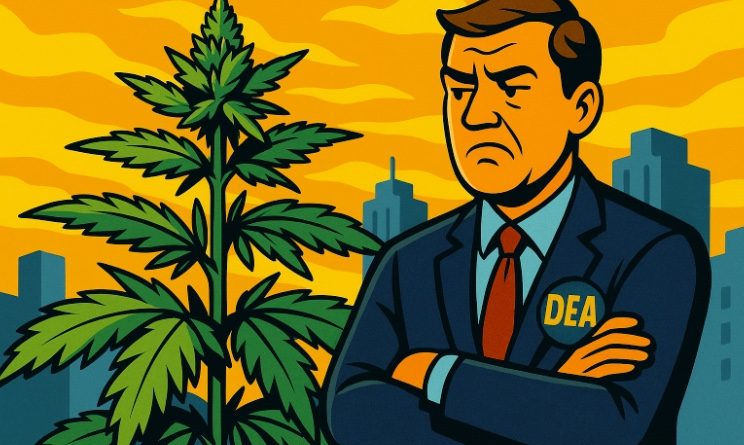
DEA Accused of Collusion as Cannabis Rescheduling Debate Heats Up
The ongoing battle over cannabis rescheduling isn’t just another chapter in federal cannabis reform. It’s a litmus test for whether government agencies will embrace science, fairness, and the will of the people—or continue kowtowing to outdated ideologies. At stake is whether cannabis will be moved from the draconian Schedule I classification, where it sits alongside heroin and LSD, to Schedule III, which at least acknowledges some medical benefit.
But let’s not kid ourselves. This isn’t about science or public health. It’s about control. The DEA’s handling of this process reeks of bias, arbitrary decision-making, and, frankly, a desperate attempt to cling to its waning authority. When regulatory agencies are more concerned with their own power than the public good, fairness becomes an afterthought.
This debate isn’t just academic. It’s a fight for truth in a world where prohibitionists like Smart Approaches to Marijuana (SAM) are handed the microphone while legitimate researchers and advocates are silenced.
The deck is stacked, but the people are watching.
The DEA’s Tainted Rescheduling Hearing
- The DEA faces accusations of colluding with prohibitionists like SAM, stacking the participant list to favor anti-cannabis rhetoric.
- Key scientific voices, including Dr. Sue Sisley, were excluded without explanation, violating transparency laws.
- The DOJ’s unprecedented role in signing the rescheduling notice instead of the DEA raises questions about agency bias.
- Advocates criticize the lack of transparency, alleging violations of the Administrative Procedure Act.
- Rescheduling to Schedule III could bring change, but the ultimate goal remains descheduling to achieve true freedom.
- The hearings are not just about reclassification—they are a pivotal moment for federal cannabis policy and justice.
DEA’s Alleged Bias and Collusion with Prohibitionists

Accusations of the DEA colluding with prohibitionists like SAM aren’t shocking—they’re expected. After all, prohibitionists thrive on fear-mongering and misinformation, and the DEA has a history of protecting its own interests at the expense of common sense. What’s troubling is just how blatant this alleged collaboration has become.
SAM’s presence on the DEA’s participant list for the hearings raises eyebrows, but the real scandal lies in who didn’t make the cut.
Colorado, a state that pioneered cannabis legalization, was denied a seat at the table, while Nebraska—a bastion of anti-cannabis sentiment—gets prime billing.
Sue Sisley, one of the most respected cannabis researchers, was also mysteriously excluded.
Is this a coincidence? Or does it reflect a deliberate effort to suppress voices that might challenge the DEA’s narrative?
Consider this: SAM representatives were allegedly tipped off about the rescheduling notice before it was even made public. How does a prohibitionist group get insider information on federal proceedings? This kind of behind-the-scenes collusion is more befitting of a banana republic than a democratic republic.
“Transparency” seems to be the buzzword the DEA throws around when it wants to sound cooperative. But when it comes time to actually follow the rules? Crickets.
Breaking Precedent with Merrick Garland’s NPRM Signature

For decades, the DEA administrator has been the one to sign off on cannabis rescheduling notices. This time, it was Merrick Garland, the Attorney General, who put his name on the NPRM (Notice of Proposed Rulemaking). To call this a break from tradition would be an understatement—it’s practically a confession that the DEA didn’t want to touch this with a ten-foot pole.
Why the sudden shift? The answer seems clear: the DEA knows its credibility on cannabis is in tatters.
After years of doubling down on the absurd claim that cannabis has “no accepted medical use,” they’re now scrambling to save face. Handing the reins to the DOJ might seem like a clever way to dodge accountability, but it raises serious questions about who’s really driving this process.
Even the presiding judge, ALJ John Mulrooney, appeared caught off guard by the DOJ’s involvement. If the judge overseeing the hearing doesn’t have clarity on the chain of command, how can the public trust this process?
Legal Challenges and Administrative Procedure Act Violations

Federal agencies love to trumpet their commitment to “due process” and “rule of law,” but the DEA’s actions in this case tell a different story. The Administrative Procedure Act (APA) is supposed to ensure fairness and transparency in federal decision-making. Yet, the DEA has apparently treated these guidelines as suggestions rather than obligations.
One glaring issue is the DEA’s failure to provide a complete list of who requested to participate in the hearings. Without this transparency, there’s no way to determine whether the agency’s decisions were based on merit or bias. Did they include participants who supported prohibition while excluding those with opposing views? The lack of documentation strongly suggests the latter.
If the DEA isn’t willing to play by the rules, why should anyone trust the outcome of these hearings?
The exclusion of Dr. Sue Sisley is a textbook example of this arbitrary decision-making.
Despite being one of the most experienced cannabis researchers in the country, she was left out without explanation. Meanwhile, prohibitionist voices with questionable expertise were fast-tracked into the process.
It’s not just unethical—it’s illegal. The APA explicitly requires agencies to provide prompt notice and reasons for denying requests to participate. The DEA’s silence in response to Sisley’s request is a clear violation of this mandate.
When federal agencies bend the rules to suit their agenda, it’s not just cannabis advocates who lose. It’s the very foundation of democracy that takes a hit.
Who Got In and Who Got Left Out

The DEA’s selection of participants for the cannabis rescheduling hearings is a masterclass in bureaucratic favoritism. The inclusion of prohibitionist groups like SAM and their affiliates is troubling enough, but the exclusion of key advocates and scientists raises even bigger questions. Where’s the transparency in this process?
Spoiler: There isn’t any.
- Who’s in: The DEA handpicked entities like the Nebraska Attorney General’s office, a vocal opponent of cannabis reform, and prohibitionist lobbyists who have long ignored the scientific consensus on cannabis.
- Who’s out: Colorado, a state that revolutionized cannabis legalization, was sidelined. And Dr. Sue Sisley, one of the most experienced cannabis researchers in the world, was mysteriously left out despite her qualifications and contributions to medical cannabis research.
It’s not hard to see the pattern here. The DEA seems to have cherry-picked participants to stack the deck in favor of maintaining outdated cannabis policies. By sidelining voices like Sisley’s and Colorado’s, the agency has effectively ensured that the hearing won’t be a balanced debate—it’ll be a soapbox for prohibitionists.
Blocking science and research from the conversation doesn’t just hurt the process; it insults the intelligence of anyone paying attention.
This deliberate exclusion isn’t just a slap in the face to the cannabis community—it’s a violation of the Administrative Procedure Act (APA), which mandates fairness and transparency in federal proceedings. The DEA’s failure to provide notice or reasons for these exclusions is a glaring legal issue that advocates are rightfully challenging.
The Role of Science in the Rescheduling Debate

When it comes to cannabis rescheduling, science isn’t just a supporting player—it’s the star of the show. Or at least, it should be. Instead, the DEA seems determined to keep scientific evidence in the wings while prohibitionist rhetoric hogs the spotlight.
Cannabis is no longer the mystery plant it was 50 years ago. Mountains of research confirm its medical benefits, from alleviating chronic pain to treating epilepsy. Yet, the DEA appears to have no interest in giving this evidence the platform it deserves. Instead of inviting experts with firsthand knowledge of cannabis’s therapeutic potential, they’ve opted for prohibitionists whose expertise begins and ends with scare tactics.
- Excluded evidence: Dr. Sue Sisley’s groundbreaking work with veterans and PTSD patients, which could have provided invaluable insight into cannabis’s medical use.
- Included rhetoric: Prohibitionist arguments rooted in the same tired fear-mongering that has failed to hold up under scrutiny for decades.
This isn’t just an oversight—it’s an intentional strategy to suppress the truth. If the DEA truly cared about making an informed decision, the hearings would be filled with scientists, doctors, and researchers. Instead, it seems the agency would rather ignore the facts in favor of maintaining its grip on a narrative that’s crumbling faster than prohibition itself.
Prohibitionists and DEA Alleged Collaboration

The relationship between the DEA and prohibitionist groups like SAM is more than a little cozy—it’s downright suspicious. Kevin Sabet, SAM’s president, has been openly bragging about his insider knowledge of the rescheduling process, raising serious questions about how this group gained access to sensitive information.
“A wise man once said, ‘I’ve got friends in low places,’” Sabet quipped on social media. Translation: The prohibitionists are working hand-in-glove with the DEA.
This isn’t speculation; it’s supported by the DEA’s participant list, which includes several SAM affiliates. Meanwhile, credible voices advocating for cannabis reform were excluded. The optics couldn’t be worse.
When a federal agency appears to be colluding with a group that profits from fear-mongering, it undermines the legitimacy of the entire process.
Collaboration with prohibitionists doesn’t just taint the hearings—it’s a direct violation of the Administrative Procedure Act. Ex parte communications, where one party communicates privately with decision-makers, are explicitly prohibited. Yet, the evidence suggests that SAM and the DEA have been engaging in exactly this kind of backdoor maneuvering.
If fairness were the goal, why are the DEA and SAM working harder to keep cannabis in the dark than to bring it into the light?
Implications for Future Cannabis Policy

What happens in these hearings will set a precedent for the future of cannabis regulation in the United States. If the DEA succeeds in controlling the narrative through bias and exclusion, it will reinforce the perception that federal agencies prioritize their own agendas over the will of the people.
Cannabis advocates have fought for decades to bring the truth about this plant to light. From its medical benefits to its economic potential, the case for cannabis reform is stronger than ever. Yet, the rescheduling hearings risk being reduced to a kangaroo court where prohibitionists call the shots.
- If Schedule III becomes reality: Access to cannabis for research and medical use could improve, but federal overreach and control will persist.
- If cannabis remains Schedule I: It would be a devastating blow to science, public health, and the millions of Americans who rely on cannabis for therapeutic and spiritual purposes.
This isn’t just about cannabis; it’s about holding federal agencies accountable. The DEA’s actions set a dangerous precedent for how regulatory processes can be manipulated to serve the interests of a select few.
The right to grow, consume, and benefit from cannabis isn’t just a policy issue—it’s a fundamental freedom. And freedoms don’t come with caveats dictated by prohibitionists.
The stakes couldn’t be higher, but the fight for cannabis reform is far from over. Advocates have truth, science, and public support on their side. The question is whether those in power will finally listen—or continue clinging to a failed system that benefits no one but themselves.
What’s Next in the Battle for Cannabis Rescheduling
The upcoming hearings aren’t just a debate over cannabis classification—they’re a referendum on the integrity of federal agencies and their ability to adapt to modern realities. The fight for cannabis reform has always been uphill, but now the stakes are higher than ever. Advocates aren’t just fighting outdated laws; they’re battling a system that seems designed to suppress change.
Here’s what to watch for as this process unfolds:
- Key dates to remember: Preliminary hearings are set to begin in December, with testimonies expected in early 2024. These proceedings will lay the groundwork for whether cannabis will finally escape the Schedule I straitjacket.
- Potential outcomes: While rescheduling cannabis to Schedule III would be a step forward, it wouldn’t solve the broader issues of federal overreach and criminalization. Full descheduling, not rescheduling, remains the ultimate goal for advocates.
- Judicial review: Both sides are preparing for legal battles that could drag this issue into the courts, where the DEA’s biases and procedural missteps will face scrutiny.
The question isn’t just whether cannabis will be rescheduled—it’s whether the process will be fair, transparent, and rooted in science. Judging by the DEA’s antics so far, the answer seems obvious.
The Verdict is Still Out

Cannabis has come a long way from the days when it was demonized as a menace to society. Yet, the federal government continues to treat this ancient, beneficial plant as a public enemy. The DEA’s handling of the rescheduling hearings is a stark reminder of how far we still have to go.
The truth about cannabis is no longer a secret. Its medical benefits are supported by mountains of research, and its cultural and spiritual significance has been recognized for millennia. The people know it, the scientists know it, and even the prohibitionists know it. But as long as federal agencies prioritize control over common sense, progress will remain elusive.
- The First Amendment protects the right to grow and consume cannabis for spiritual and entheogenic purposes. Yet, millions are still persecuted for exercising this freedom.
- The Fourth Amendment promises protection against unreasonable searches and seizures, but cannabis users face constant violations of their privacy through invasive drug testing and criminalization.
The irony is almost poetic: cannabis, once used to pay taxes, now comes with taxes so high they’d make the founding fathers blush.
The fight for cannabis reform isn’t just about policy—it’s about freedom, fairness, and the fundamental right to choose natural healing over pharmaceutical dependency. This battle may be far from over, but one thing is clear: cannabis isn’t going anywhere, and neither are the advocates fighting for its rightful place in society.
What we’re witnessing is more than a hearing. It’s a turning point in the long struggle for cannabis justice. And no amount of bureaucratic bias or prohibitionist propaganda will silence the truth: cannabis is here to stay.