
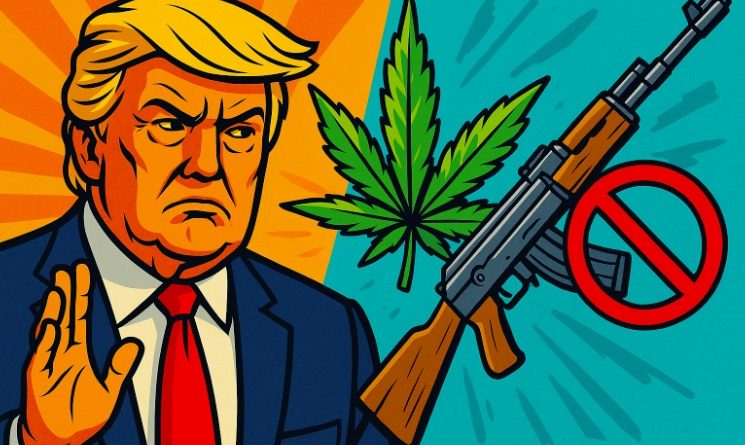
The Collision of Cannabis and Gun Rights
Cannabis, once revered as currency for taxes, has now become the scapegoat for overregulation. In the latest affront to constitutional liberties, the Department of Justice (DOJ) has doubled down on its effort to deny gun rights to those who consume cannabis, even when it’s for state-approved medical use. The rationale? A poorly constructed argument linking cannabis users to supposed “dangerousness.” How convenient for a system that allows alcohol and prescription pills to flow freely while painting cannabis as a menace.
This isn’t just about guns or cannabis—it’s a battle for basic rights. The DOJ’s legal gymnastics frame cannabis consumers as unfit, while ignoring actual data and common sense. Yet again, federal cannabis laws are a relic of outdated and fear-driven policies.
Key Takeaways on the Battle for Rights
- DOJ pushes unconstitutional bans, denying gun rights to state-legal medical users.
- Federal prohibition contradicts state cannabis laws and public opinion.
- Courts are increasingly ruling these bans as outdated and unsupported.
- Activists and lawmakers fight for gun rights restoration.
- Overregulation stems from fear-driven policies, not evidence.
- Ending prohibition is key to protecting constitutional freedoms.
The Federal Ban on Cannabis Users Owning Guns

The federal statute in question, Section 922(g)(3), bars individuals who use cannabis from buying or possessing firearms. It’s a policy steeped in contradiction, penalizing people for a plant deemed medicinal by 38 states. To make matters worse, this ban applies even if someone isn’t intoxicated at the moment of purchase or possession. Imagine being punished for something you might do in the future—welcome to 21st-century regulatory logic.
Historical justifications for the ban are laughably outdated. The DOJ compares this restriction to laws disarming the intoxicated or mentally ill, as if cannabis users automatically lack control or judgment. Never mind that there’s no evidence to support these sweeping generalizations—this is fear-mongering dressed up as law.
Here’s the kicker:
- Alcohol drinkers can buy firearms, no questions asked.
- Prescription opioid users? Enjoy your Second Amendment rights.
- But medical cannabis patients, who are following state laws? Clearly, they’re dangerous.
The hypocrisy is almost too much to stomach.
The Pennsylvania Case

Warren County District Attorney Robert Greene’s lawsuit takes aim at this unconstitutional overreach. As a certified medical cannabis patient, Greene uses the plant to treat his health conditions, but federal law prevents him from exercising his Second Amendment rights. The government’s response? A flimsy argument that this restriction is “temporary” and akin to other bans on dangerous individuals.
Greene’s legal team highlights a glaring flaw: this ban applies indefinitely to anyone who uses cannabis, regardless of whether they’re currently impaired or not. Contrast this with other restrictions, like those on individuals with domestic violence restraining orders, which require due process and are often temporary. For cannabis users, the punishment is preemptive and permanent.
The DOJ’s defense leans heavily on the Supreme Court’s decision in U.S. v. Rahimi, claiming it supports the disarmament of “dangerous” groups. However, even Rahimi establishes that Second Amendment rights can only be restricted if someone poses a credible threat. The government’s claim that cannabis users inherently qualify as dangerous doesn’t hold up under scrutiny.
This isn’t just about Greene; it’s about every medical cannabis patient being denied their constitutional rights.
Contradictions Between Federal and State Cannabis Laws
State-legal cannabis and federal prohibition exist in a constant tug-of-war, leaving millions of Americans in legal limbo. While states like Pennsylvania have embraced medical marijuana, federal law still classifies cannabis as a Schedule I substance—on par with heroin. This creates a paradox: patients can legally medicate under state law but must surrender other rights, like owning firearms.
Let’s compare:
- Cannabis is state-legal in 38 states, yet users are considered criminals under federal law.
- Alcohol, a proven contributor to violent crime, faces no such restrictions.
- The federal government actively undermines state sovereignty by enforcing these outdated bans.
This legal quagmire not only erodes individual rights but also discourages patients from seeking medical cannabis. Who wants to choose between their health and their constitutional freedoms? It’s a calculated move to keep the War on Drugs alive in spirit, if not in name.
And here’s where it gets really insulting: the DOJ continues to argue that federal cannabis prohibition “saves lives,” while dismissing overwhelming public support for legalization and reform. If public opinion mattered, we’d already be celebrating full federal legalization.
The Supreme Court and Second Amendment Implications

Recent court rulings have started to push back against the government’s heavy-handed policies, offering a glimmer of hope for cannabis users. The Fifth Circuit’s decision in U.S. v. Daniels declared the ban on cannabis users owning firearms unconstitutional, arguing that disarming a sober individual for past cannabis use is both illogical and excessive.
Yet, the DOJ clings to outdated arguments, insisting that cannabis consumers pose a danger. Their reliance on U.S. v. Rahimi as justification is a weak attempt to fit square pegs into round holes. The Rahimi ruling clearly states that any Second Amendment restriction must be based on a credible threat to public safety—something the government has yet to prove in relation to cannabis users.
Judges aren’t buying it. In multiple cases, courts have pushed back, pointing out that the government’s position lacks evidence and logical consistency. Some rulings, like those in Texas and Oklahoma, have outright declared the cannabis-gun ban unconstitutional. These victories highlight the growing recognition that federal cannabis laws are stuck in the past, failing to align with modern science and societal norms.
The stakes couldn’t be higher. As more states legalize cannabis, the disconnect between federal and state laws becomes increasingly untenable. The courts will play a crucial role in resolving these contradictions, but until then, millions of Americans are left waiting for justice.
The Broader Implications of DOJ’s Arguments

The DOJ’s reasoning behind banning cannabis users from owning firearms is a house of cards built on flimsy stereotypes. Their claims hinge on outdated assumptions about public safety, portraying cannabis users as reckless, dangerous, and prone to criminal behavior. Let’s take a moment to dissect the absurdity.
Among the DOJ’s most egregious arguments:
- Cannabis users are more likely to commit crimes. (No evidence provided, but fear-mongering is a great way to sidestep facts.)
- Cannabis users pose a higher risk of suicide. (Meanwhile, alcohol—a known depressant—doesn’t trigger the same restrictions.)
- Cannabis users are unlikely to store firearms properly. (Because surely the average medical patient with chronic pain is also incapable of basic safety measures.)
The hypocrisy here is glaring. Alcohol-related firearm deaths account for thousands of tragedies each year, yet alcohol consumers face no restrictions on their gun rights. Prescription drug users—some consuming highly addictive and impairing substances—are similarly untouched. But cannabis? Somehow, this ancient, natural plant is singled out as the root of all danger.
“The DOJ’s arguments are less about public safety and more about preserving outdated drug policies. When the data doesn’t support the narrative, fear replaces facts.”
The reality is simple: there’s no compelling evidence that cannabis use correlates with improper firearm use. The government’s claims crumble under scrutiny, but the ban remains in place, punishing law-abiding medical cannabis patients for daring to seek natural treatment.
Public Opinion and the Political Landscape

The tide of public opinion is rapidly turning against these draconian policies. Cannabis is now mainstream, with polls showing overwhelming support for legalization and reform. Yet, the federal government clings to its prohibitionist roots, using outdated laws to strip rights from those who dare to challenge its authority.
Some lawmakers and activists are fighting back, pushing for state-level protections that would shield medical cannabis users from these unconstitutional bans. Consider:
- In Pennsylvania, new legislation seeks to remove state-level barriers to firearm ownership for medical marijuana patients.
- Colorado activists recently attempted to introduce a ballot initiative to preserve gun rights for cannabis users, though it fell short of the required signatures.
- Even Republican representatives have called out the federal government for criminalizing millions of responsible cannabis users who own guns.
Despite these efforts, the federal government’s resistance to change is palpable. They’re not just out of touch—they’re actively ignoring the will of the people. If public safety were truly the priority, reform would already be underway.
The Way Forward
This legal battle is about more than cannabis or guns—it’s about the fundamental rights guaranteed by the Constitution. Federal cannabis laws, relics of the failed War on Drugs, are increasingly at odds with modern science, state policies, and the demands of the American people. It’s not just time to reform these laws; it’s time to dismantle the system that created them.
The solution is clear:
- End federal cannabis prohibition and recognize the plant’s legitimacy as medicine.
- Restore Second Amendment rights to cannabis users, aligning laws with both science and common sense.
- Challenge overregulation that penalizes responsible citizens for making personal health decisions.
Every step forward requires a united effort from advocates, lawmakers, and everyday cannabis users. The government’s outdated policies can only persist if we allow them to.
Empowering Change Through Unity

This isn’t just about laws or politics—it’s about reclaiming the fundamental freedoms guaranteed by the Bill of Rights. The right to grow, consume, and use cannabis without fear of persecution is a matter of personal liberty and spiritual expression. The right to own firearms for protection and lawful purposes is equally sacred. Together, these rights form the backbone of a free society.
Regulators may try to divide and conquer, pitting cannabis users against other groups in the name of “safety,” but the truth is simple: this fight is winnable, and the time for change is now. From the courtrooms to the ballot boxes, every voice matters in pushing back against overreach and reclaiming the rights that have been stripped away.
The battle may be long, but the outcome is worth fighting for.
Cannabis users deserve better.